How to Compare Two YouTube Channels Side by Side
By TubeScope Editorial Team · 2026-06-11 · 7 min read
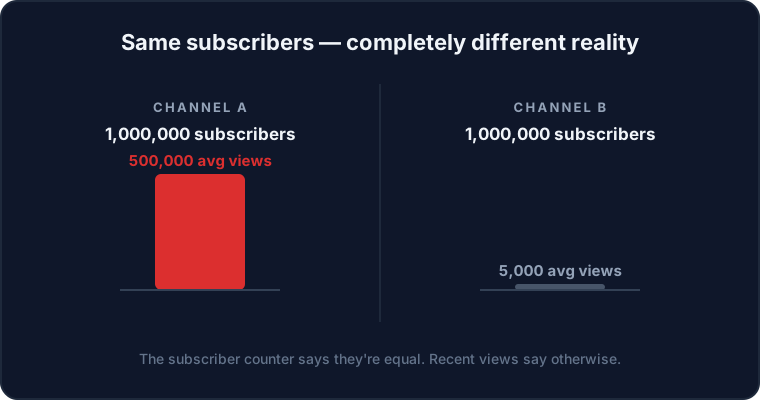
Subscriber count is the first number everyone compares — and the least useful one. Two channels with a million subscribers can be in completely different shape: one pulls 500,000 views on every upload, the other struggles to reach 5,000. If you judge them by the subscriber counter, they look identical. They are not.
This guide walks through the numbers that actually tell you something when you put two channels side by side, what each one reveals, and the patterns to look for — whether you're sizing up a competitor, researching a niche, or checking how your own channel really stacks up.
Why subscriber counts mislead
Subscribers are cumulative. A channel keeps almost every subscriber it has ever gained, even if it stopped being interesting years ago. A channel that peaked in 2020 and faded can still show millions of subscribers while its new uploads barely register.
YouTube's recommendation system doesn't care much either. The algorithm distributes videos based on how viewers respond to recent uploads — click-through, watch time, satisfaction signals — not on how many people clicked Subscribe over the channel's lifetime. That's why a 50,000-subscriber channel can outperform a 2-million-subscriber channel in actual daily views.
So when you compare channels, compare current performance, not accumulated audience. Here's what that means in practice.
The six numbers that actually matter
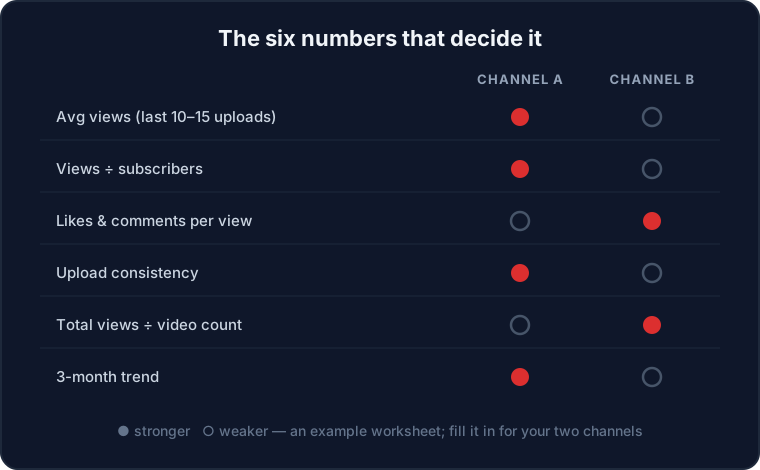
1. Average views per recent video
The single best health metric. Take the last 10–15 regular uploads and look at their typical view count — ignore the one viral outlier and the one flop. This tells you what the channel actually earns from the algorithm today. When people say a channel is "bigger," this is the number that should decide it.
2. Views-to-subscriber ratio
Divide typical recent views by subscriber count. If a channel with 100,000 subscribers averages 30,000 views per video, that's a 30% ratio — a strong, awake audience. If a 1-million-subscriber channel averages 20,000 views, that's 2% — most of its audience has moved on. This one ratio exposes "legacy" channels instantly.
3. Engagement rate
Likes and comments relative to views measure how much the audience cares. Roughly speaking, a healthy long-form channel sees likes in the range of 3–6% of views; passionate niche audiences go higher. Very high views with unusually low engagement often means clickbait packaging or a passive, low-loyalty audience — which advertisers and the algorithm both eventually notice.
4. Upload consistency
Look at the gaps between uploads, not just the average frequency. A channel that posts weekly like clockwork is operationally healthier than one that posts four videos in one month and disappears for two. Consistency is also one of the strongest predictors of which channel will still be growing a year from now.
5. Lifetime efficiency: total views ÷ video count
This tells you how hard the back catalog works. Two channels can both have 100 million total views — one earned them with 150 videos (a catalog that keeps getting recommended), the other with 3,000 videos (a content treadmill). Higher views-per-video means the library has lasting search and recommendation value.
6. Growth trend
Direction beats size. A channel adding views and subscribers month over month is in a better position than a bigger channel that's flat or shrinking — because trends on YouTube compound. Always ask: which line is pointing up right now?
Reading the patterns
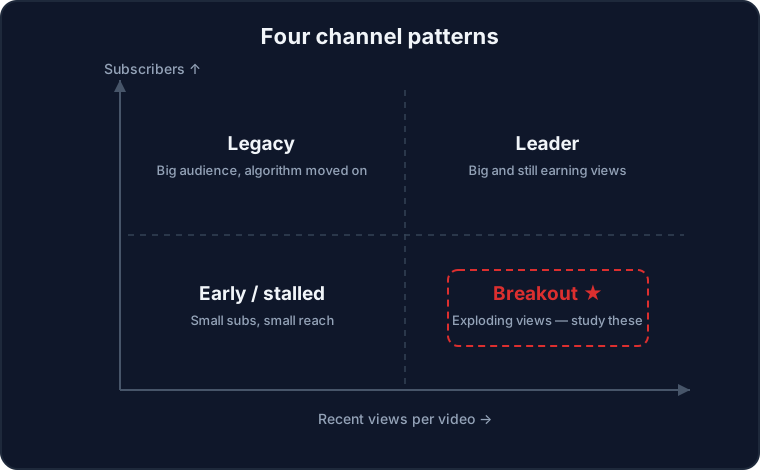
Once you have those numbers for both channels, the comparison usually falls into one of a few recognizable shapes:
- Big subscribers, low recent views. A legacy channel. The brand is large, but the algorithm has moved on. Don't be intimidated by these — and don't copy their current strategy, because it isn't working.
- Small subscribers, high views-per-sub. The algorithm is actively pushing this channel to non-subscribers. This is what a channel looks like while it's breaking out. Study its recent titles and thumbnails closely.
- High views, weak engagement. Packaging is winning clicks but the content isn't landing. Vulnerable position — one algorithm shift away from decline.
- Steady uploads, slowly climbing views, solid engagement. The durable grower. This is the pattern worth copying, even though it's the least flashy.
Doing it in two minutes instead of an hour
You can collect all of this manually — open both channels, count recent uploads, average the views, divide by subscribers, check the upload dates. It works, but it's slow, and YouTube's own pages don't show totals like lifetime views without digging.
The faster way: put both channels into TubeScope's free channel comparison tool. It pulls subscribers, total views, video counts, average views, engagement, upload cadence, and a health score for up to four channels side by side — no sign-up, no API key. From there, click through to either channel's full report, or run a channel audit for the deep dive on upload schedules and top performers.
Mistakes to avoid
- Comparing across niches. A finance channel and a gaming channel live in different universes — different view norms, different engagement habits, different revenue per 1,000 views. Compare within the niche, or the numbers mean nothing.
- Mixing Shorts-heavy and long-form channels. Shorts views and long-form views are not the same currency. A channel pumping Shorts can show huge view counts with a fraction of the watch time and revenue. Check what format the views come from before declaring a winner.
- Judging a snapshot instead of a trend. Any single week can mislead — one viral video, one holiday dip. Look at the direction over a few months before drawing conclusions.
- Treating the winner as a template. The point of comparing isn't to crown a champion — it's to find which specific behaviors (cadence, titles, formats, video length) separate the stronger channel, so you can test them yourself.
The quick checklist
- Average views on the last 10–15 uploads — who actually wins?
- Views ÷ subscribers — whose audience is awake?
- Likes and comments per view — whose audience cares?
- Upload gaps — who shows up reliably?
- Total views ÷ video count — whose catalog keeps working?
- Three-month trend — whose line points up?
Run that list and you'll know more about two channels in five minutes than most people learn from staring at subscriber counts for a year. And if you want the numbers collected for you, the side-by-side comparison is free — or browse the top channels by category to find worthy channels to measure against.
Try it yourself: Compare Channels · Channel Audit