Why Your YouTube Views Are Dropping — 9 Causes and Fixes
By TubeScope Editorial Team · 2026-06-15 · 9 min read
If your YouTube views are falling, it almost always comes down to one of three things weakening: how many people YouTube shows your video to (impressions), how many of them click (click-through rate), or how long they stay (watch time). Everything else — the "algorithm," seasonality, your niche — works through those three levers. The good news: that makes a view drop diagnosable. Here's how to find the real cause and fix it, instead of guessing.
First, understand why views snowball
YouTube growth is a loop. Impressions lead to clicks, clicks lead to watch time, and strong watch time tells the algorithm to show the video to more people — which creates more impressions. When every step is healthy, the loop expands. When one step weakens, the whole loop shrinks, and a small dip can compound into a big one.
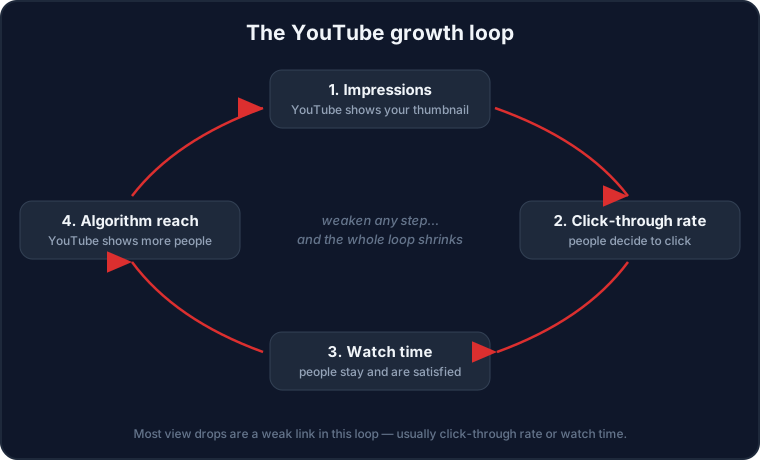
Find out which number actually dropped
Before changing anything, look at which metric moved. In YouTube Studio (or with a channel audit), compare your recent uploads to your usual baseline:
- Impressions down? The algorithm is showing your video to fewer people — usually a topic, consistency, or relevance issue.
- Impressions normal but CTR down? People are seeing it and not clicking — a packaging problem (thumbnail and title).
- CTR fine but watch time down? People click and leave — a content problem (hook, pacing, or the video not matching the title).
That one check tells you which of the causes below to focus on.
The 9 most common causes (and the fix for each)
1. Your click-through rate decayed
Thumbnails and titles that worked six months ago get stale, and audiences stop noticing a repetitive style. Fix: study your own best performers, refresh your packaging, and make each thumbnail distinct. Even a small CTR gain reopens the whole growth loop.
2. Weak audience retention
If viewers drop off in the first 30 seconds, the algorithm stops promoting the video. Slow intros, long branding, and rambling openings are the usual culprits. Fix: get to the value fast, cut filler, and make sure the first 15 seconds deliver on the title's promise.
3. You drifted off your core topic
A sudden change in subject confuses both your subscribers and the algorithm's sense of who to recommend you to. Fix: return to the content your channel is known for, then reintroduce new ideas gradually rather than pivoting overnight.
4. Upload consistency slipped
Long, irregular gaps reset your momentum and your audience's habit of watching you. Fix: a steady, sustainable schedule beats sporadic bursts — consistency is one of the strongest predictors of which channels keep growing.
5. Seasonality
Views naturally dip in summer, around holidays, and on your niche's own slow cycles. Fix: don't overreact — compare to the same period last year, and plan lighter or evergreen content for predictable slow stretches.
6. Demand for your topic fell
Sometimes the trend simply cooled and fewer people are searching for what you make. Fix: check what's rising with the Trending tool, and shift toward adjacent or evergreen topics that hold demand year-round.
7. Your format mix changed
Leaning hard into Shorts can spike your view count and then crater your long-form views (the two attract different viewers), and the reverse happens too. Fix: be deliberate about Shorts versus long-form, and judge each format on its own retention and watch time, not just raw views.
8. A run of underperformers
A few weak videos pull down your channel's averages and the algorithm's confidence, which then dampens reach on your next upload. Fix: don't chase the misses — return to a proven format to rebuild momentum, then experiment from a position of strength.
9. Technical and SEO gaps
Vague titles, missing descriptions, wrong-language metadata, or a broken thumbnail quietly cost you impressions and clicks. Fix: write clear, specific titles, fill in descriptive metadata, and double-check your tags and SEO on every upload.
How to diagnose your own drop
Run your channel through a free channel audit to see your upload consistency, engagement, and recent performance in one place, then compare your current uploads against your best ones to spot which lever slipped. If you want to benchmark against others in your niche, compare your channel side by side with a competitor to see whether the dip is you or the whole category.
When a dip is actually normal
Not every decline is a problem. A single viral video inflates your baseline, so the "drop" afterward is just a return to normal. Weekly swings and seasonal lulls are expected. Look at the trend over one to three months, not a single upload, before concluding something is wrong — and never compare a regular video to your best-ever one.
The quick takeaways
- Find which metric dropped first: impressions, CTR, or watch time. The fix depends on which.
- CTR and retention are the two levers behind most view drops — fix packaging and hooks before anything else.
- Consistency and staying on-topic keep the algorithm confident in your channel.
- Some dips are normal — judge the trend over weeks, not one video.
Start by auditing your channel free with the Channel Audit, check rising demand on Trending, or compare against a competitor to see if the dip is you or your niche.
Frequently asked questions
Why did my YouTube views suddenly drop?
A sudden drop is almost always a weak link in the growth loop: lower click-through rate on recent thumbnails/titles, weaker audience retention, or reduced reach after an off-topic upload or a gap in your schedule. Check which metric moved in YouTube Studio before changing anything.
Is it normal for YouTube views to go up and down?
Yes. Weekly swings, seasonal lulls, and the dip after a viral video are all normal. Judge the trend over one to three months rather than reacting to a single upload, and don't compare an ordinary video to your best-ever one.
Did the algorithm change, or am I shadowbanned?
True 'shadowbans' are rare. In almost every case a view drop is explained by click-through rate, retention, topic relevance, or consistency — not a hidden penalty. Look at your analytics before assuming the algorithm is against you.
How do I get my YouTube views back up?
Diagnose the metric that dropped, then act: refresh thumbnails and titles if CTR fell, tighten your hook and pacing if retention fell, return to your proven core topics, and upload consistently. A free channel audit helps you see which lever to pull.
How long does it take for views to recover?
Often a few solid uploads over a few weeks. Consistency matters more than any single video — steady, on-topic uploads rebuild the algorithm's confidence faster than one big swing.
Try it yourself: Channel Audit · Compare Channels · Trending Videos