How the YouTube Algorithm Works in 2026 (What Creators Can Actually Control)
By TubeScope Editorial Team · 2026-09-08 · 8 min read
The most useful thing to understand about the YouTube algorithm is that there is no single algorithm ranking your video. There are several recommendation systems, one per surface, and each is trying to predict what one specific viewer will click and keep watching. Once that is clear, most of the folklore falls away and what you can actually control comes into focus.
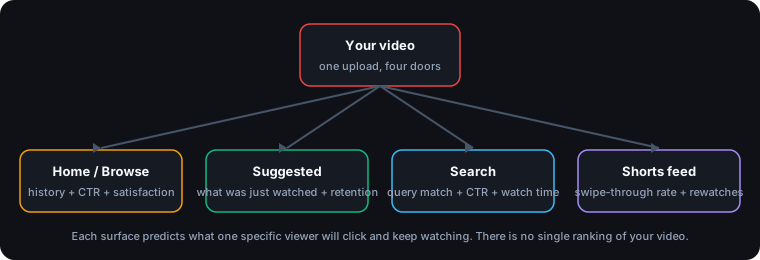
The four surfaces
Home is personalised from a viewer's history and predicts what they will click and enjoy before they have searched for anything. Suggested sits beside and after the video someone is already watching, and leans on what people watched next in the past. Search matches the query, then ranks by which results people clicked and stayed with. The Shorts feed is its own system, driven by how many viewers keep watching rather than swiping past. YouTube Studio's traffic-sources report tells you which doors your videos are coming through; most channels are surprised by the answer.
The signals YouTube has said it uses
YouTube has described its recommendation goals publicly for years, and the core has been stable: it predicts click-through (will this viewer choose this video), watch time and average view duration (will they stay), and satisfaction (survey responses, likes and dislikes, whether they come back, and the "not interested" button). It also weighs a viewer's own history heavily — which is why the same video is recommended to one person and never shown to another. The system optimises for the viewer's session, not for your video. Everything that follows is a consequence of that.
What that means in practice
- The algorithm follows the audience; it does not lead it. A video that people click and finish gets shown to more people like them. There is no separate "boost" to earn.
- Packaging and the first minute do most of the work. Click-through decides whether the loop starts; early retention decides whether it continues. Everything else is second-order.
- Consistency is a signal about you, not a rule. A regular cadence teaches both the audience and the system what to expect; there is no penalty for a missed week, only a missed opportunity.
- Topics compound. Videos on related subjects feed each other through Suggested. A channel that jumps between unrelated topics resets that graph every time.
The myths, briefly
- "Posting at the right minute matters." Barely. Your audience's activity window matters a little; regularity matters far more.
- "Tags are how videos rank." Tags help with misspellings and synonyms. Title, thumbnail, and content carry the weight. Our Tags tool exists to be precise, not to game anything.
- "The algorithm punishes you for taking a break." It does not; it simply has nothing new to recommend. Momentum returns when uploads do.
- "Subscribers determine reach." Subscribers get a nudge; recent performance determines reach. Channels with a million dormant subscribers are shown to fewer people than channels with fifty thousand active ones.
- "There is a shadowban." What creators experience as a shadowban is almost always a run of videos with weak click-through or retention, which the system reads as a satisfaction signal.
What you can actually control
Five things, in order of leverage. First, the promise: a title and thumbnail that make one specific, honest claim — test them side by side in the Title Rewriter and Thumbnail Tester. Second, the hook: deliver on the promise inside the first thirty seconds. Third, fit: make videos for the audience you already have, or deliberately rebuild for a new one. Fourth, cadence: a schedule you can keep, which the Channel Audit scores. Fifth, format clarity: decide what Shorts are for on your channel. Nothing on that list is a trick, which is exactly why it works.
How to read your own Studio
Impressions tell you whether YouTube is testing the video. Click-through tells you whether the packaging earns the test. Average view duration and the retention curve tell you whether the video earns a second test. Traffic sources tell you which surface is working. Read them in that order and the algorithm stops being a mystery and becomes a feedback loop you can see.
If your channel has stalled, our guide on why channels stop growing turns these signals into seven checks; if it used to grow and stopped, start with why views drop.
Frequently asked questions
How does the YouTube algorithm decide what to recommend?
Separate systems for Home, Suggested, Search, and the Shorts feed each predict what a specific viewer will click and keep watching, using their history plus signals like click-through rate, watch time, and satisfaction responses. It optimises for the viewer's session, not for any one video.
What does the YouTube algorithm reward most?
Videos that earn the click and then hold the viewer. Click-through starts the loop; retention and satisfaction keep it going. Packaging and the first minute therefore matter more than any other single factor.
Does the algorithm punish channels that stop uploading?
No. A break simply means there is nothing new to recommend. Reach returns with new uploads that perform; there is no stored penalty.
Is there a YouTube shadowban?
What creators describe as a shadowban is almost always a run of videos with weak click-through or retention, which the system reads as viewers not being satisfied. The remedy is packaging and pacing, not an appeal.
Do tags still matter for the YouTube algorithm?
Only marginally — for misspellings, synonyms, and disambiguation. Title, thumbnail, and the content itself carry the ranking weight. Use tags to be precise, not to chase reach.
Try it yourself: Title Rewriter · Thumbnail Tester · Channel Audit